
Fall 2026 Human Rights Newsletter: Annual report, UNHR testifies to the IACHR, dashboard on ICE deaths, student work and more
In this edition:
New annual report shows UNHR’s interventions amid rising authoritarianism
Second LL.M. cohort arrives in Lisbon to begin program at NOVA School of Law
Students and supervisors lead fact-finding and capacity-building in Brazil, Panama, Mexico, Bolivia, and Belgium
WATCH: UNHR testifies to the Inter-American Commission on Human Rights about US abuses of freedom of expression and assembly
EXPLORE: UNHR interactive dashboard of deaths and detention resulting from ICE actions
More of UNHR at work
UNHR in the news
New annual report shows UNHR’s interventions amid rising authoritarianism
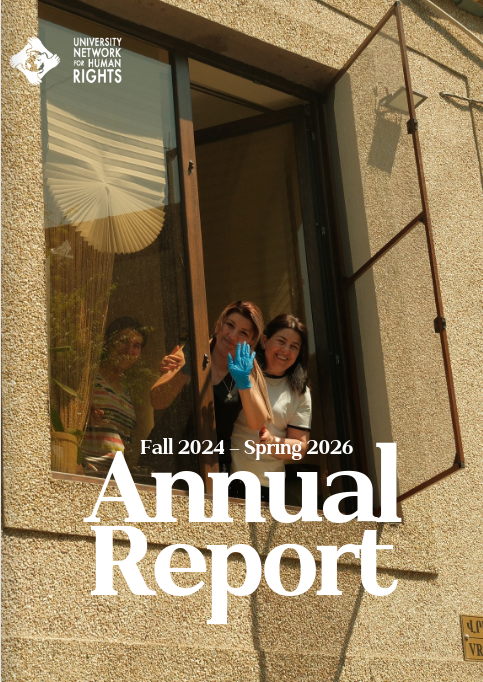
Rights abuse is rampant in many parts of the world.
Faced with this bleak panorama, many of today’s youth have opted out of engagement in civil life or in politics. The situation is hopeless, many believe. The fix is in. We can’t change things. The challenges are too great.
It is tempting to give in to this view. The challenges are indeed monumental. . . . At the University Network for Human Rights, despite the challenges we face, we see ourselves as fortunate. As trying as things may seem and be for us, we know they are far more severe for others. And, despite the odds, we maintain our hope and we believe that we can make things better. Our institutional vision embraces these two elements: our hope that a more just world is possible and our belief in our collective capacity to contribute to positive change. We also believe that we have a responsibility to persist in the face of challenges.
At the University Network, we seek to put this vision into practice in two areas. First, through direct work with communities facing rights abuse; and second, through that community-based work, in the training of the next generation of social justice activists in human rights.
Over the past seven years, this is what we have been doing at UNHR. The big picture is, at best, uncertain. But closer to the ground, we can see the change that we have been able to be a part of in both these areas. This report summarizes our work over the past 18 months. From challenging ethnic cleansing and genocide in Nagorno-Karabakh and Palestine; to confronting egregious abuses by ICE in the United States; to demanding accountability in Bolivia and Brazil; to working with victims of forced disappearances in Mexico and Nepal; to documenting and denouncing environmental devastation affecting indigenous communities in Argentina Peru, Panama and Guinea-Bissau; to fighting to ensure there is space to address all these issues in universities in the United States, Portugal, and elsewhere, our work has centered hope and change and our collective responsibility to advance both.
Executive Director Jim Cavallaro
Second LL.M. cohort arrives in Lisbon to begin program at NOVA School of Law

In August, the inaugural cohort of the LL.M. in Human Rights Advocacy completed their third and final semester of the program. Meanwhile, UNHR welcomed the second cohort of students to Lisbon, where they began their studies at NOVA School of Law.
The students complete a two-week introductory seminar and orientation before the fall semester of law school classes begins. In the spring, students will participate in the simulation exercise and a seminar series with expert human rights practitioners from around the globe. Finally, in the summer, students will apply what they’ve learned to human rights projects in partnership with communities challenging abuses worldwide.
Applications for the 2027-2028 academic year will open in mid-September.
Students and supervisors lead fact-finding and capacity-building in Brazil, Belgium, Bolivia, Mexico, and Panama
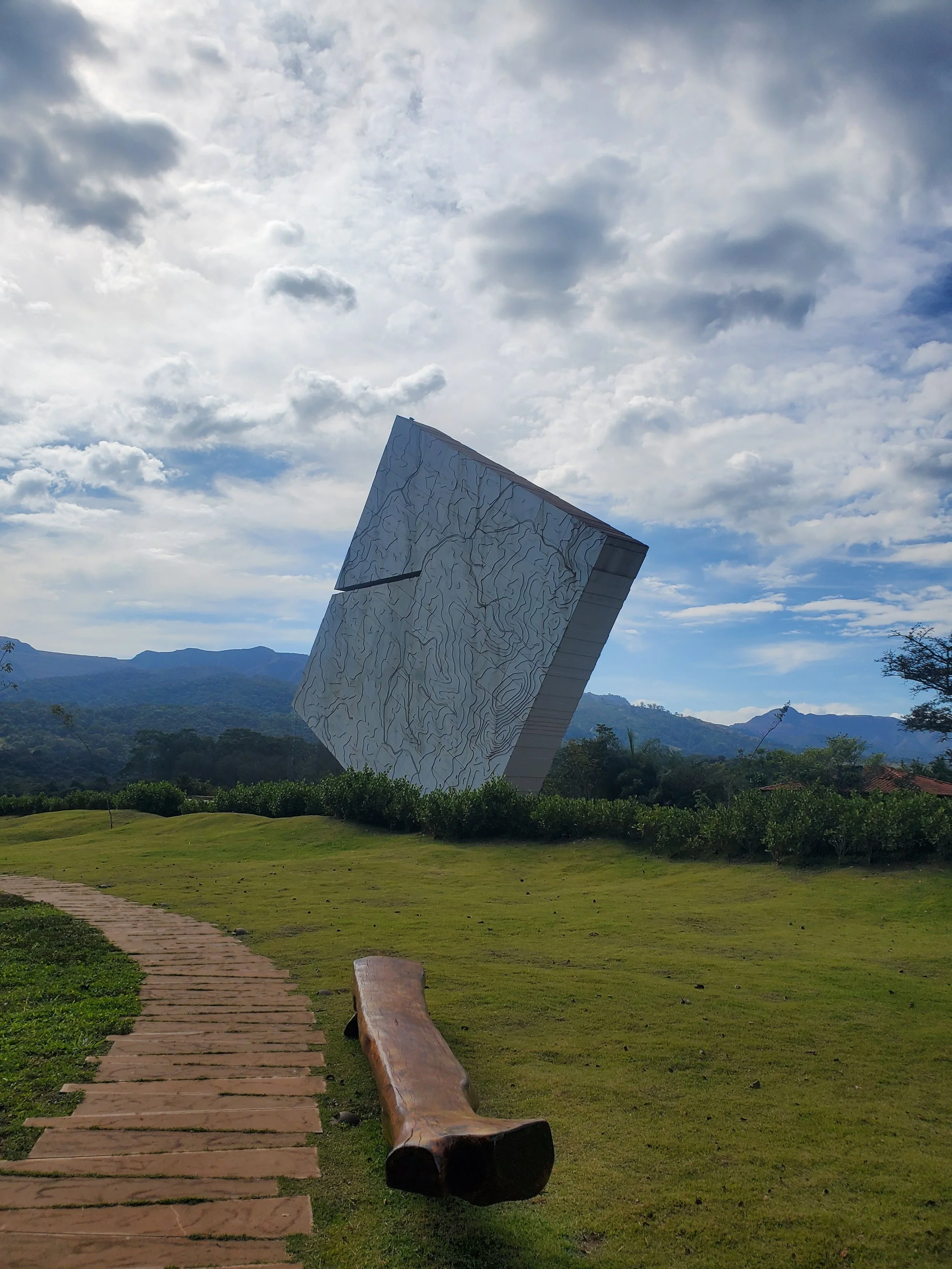
Brazil: In June, UNHR supervisors and ACTS students interviewed dozens of experts and community members affected by dam collapses to evaluate the implementation of reparations and measures to repair the damage caused and prevent future disasters. Working with Justiça Global, the UNHR team traveled to Belo Horizonte, Ouro Preto, Mariana, Bento Rodrigues, Quilombo da Gesteira, and Brumadinho. The findings will support efforts to achieve justice and reparations in the cases of Mariana and Brumadinho, as well as for other similar environmental crimes. Read more about the project here.
Belgium: As part of a documentation project on the lives, work, and Israel’s targeted killings of Gaza’s journalists, UNHR organized a gathering of survivor-journalists in Europe. Here, the community came together for the first time to discuss the memory of their killed colleagues and their own challenges in displacement. Support the project here.
Bolivia: In late 2025, protests spread across Bolivia over proposed legislation targeting Indigenous lands and criminalizing protest. The government responded by declaring a state of emergency, violently attacking demonstrators, and arresting leaders under the pretext of “terrorism” allegations. In July, UNHR students and supervisors traveled to Bolivia to meet with detainees, leaders in hiding, and those injured in the crackdown. Students have since prepared materials for submission to the Inter-American Commission on Human Rights.
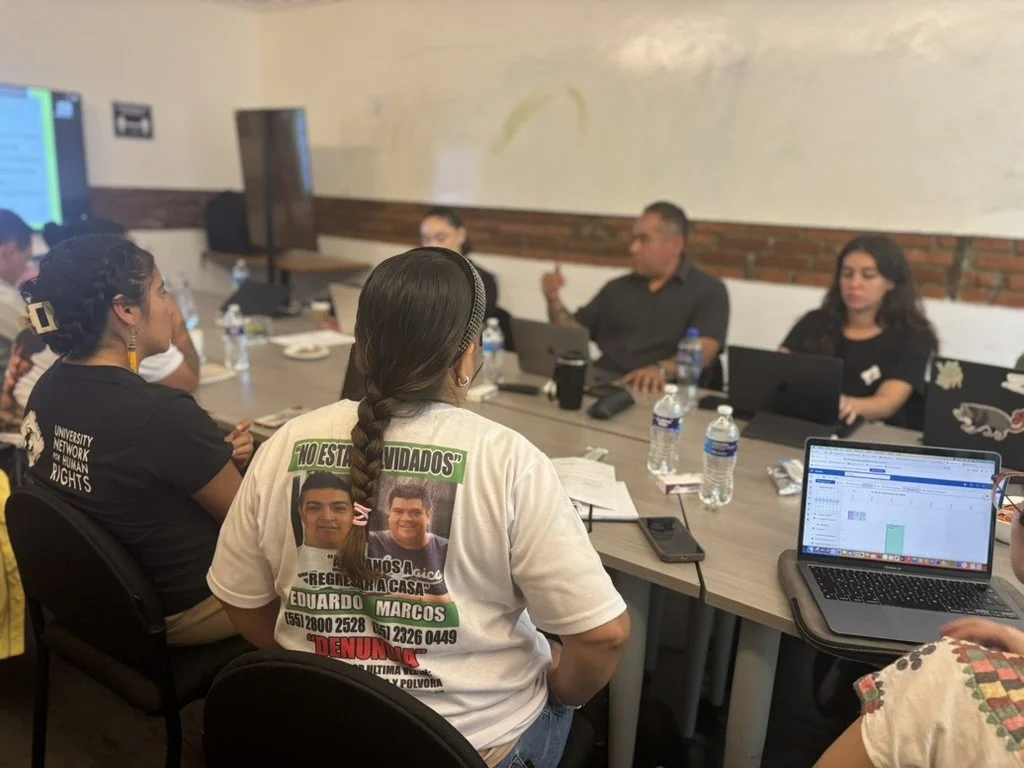
Mexico: In October 2024, UNHR and Fundar published a report documenting barriers to justice and search efforts in Mexico and calling for a hybrid justice mechanism composed of national and international experts. This summer, UNHR staff and students traveled to Mexico City to advance this proposal through meetings with key stakeholders. The team also worked directly with families of disappeared persons, holding an advocacy workshop and gathering their perspectives on the proposed mechanism. Read more about the project here.
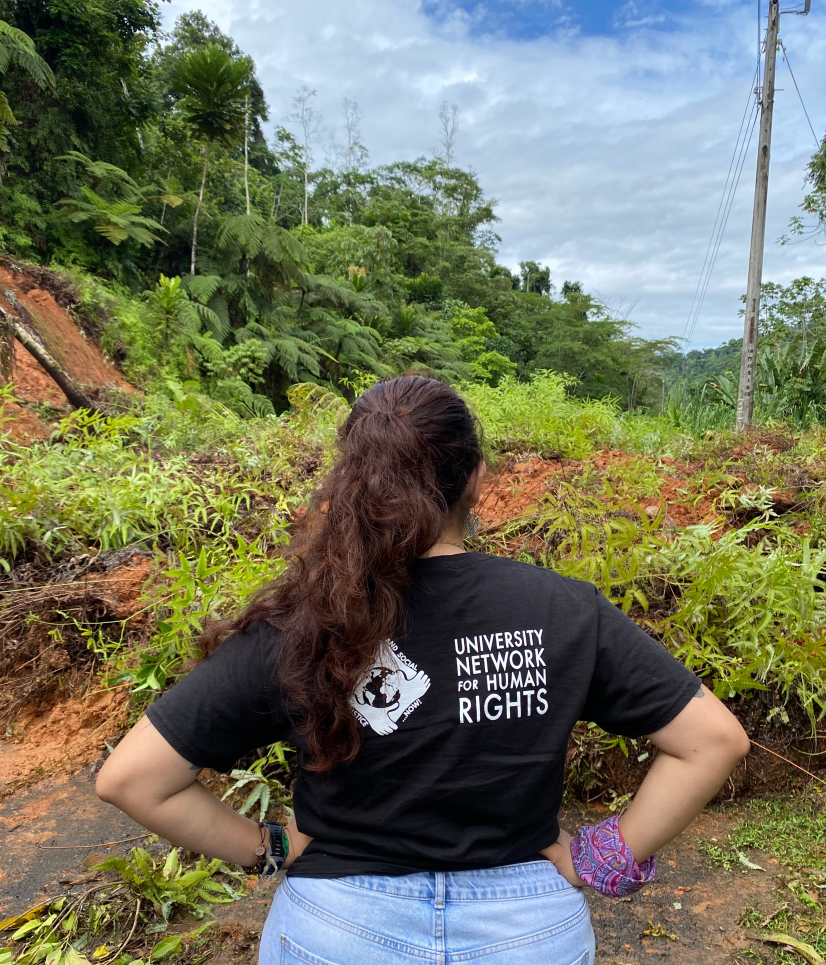
Panama: In July, UNHR supervisors and students traveled to Panama to follow up on the situation of Ngöbe indigenous communities affected by the construction of a hydroelectric dam. With the support of Cultural Survival, the team interviewed victims and documented the situation on the ground, while also meeting with NGOs and local stakeholders. The findings will support ongoing efforts to advocate for the rights of the Ngöbe communities affected by the dam within the Inter-American Human Rights system. Read more about the project here.
WATCH: UNHR testifies to the Inter-American Commission on Human Rights about US abuses of freedom of expression and assembly
Among the second Trump Administration’s escalating human rights abuses is an aggressive assault on immigration and freedom of assembly. The State has weaponized policy and policing to round up and deport hundreds of thousands of people, including U.S. citizens. Meanwhile, as mass demonstrations have come together across the United States in protest of this crackdown, government agents have responded with violence, injured and killed people, targeted journalists and human rights defenders, and arbitrarily detained scores of protesters. Together with its leveraging of charges and accusations of terrorism against people and groups who dissent, these practices by the United States form a methodology of oppression chilling a fundamental democratic right: the freedom of expression.
In August, in partnership with civil society organizations and legal clinics, UNHR presented its synthesis of the overwhelming body of open-source evidence of these abuses to the Inter-American Commission on Human Rights in the first-ever thematic hearing on abuses in the United States. UNHR was joined by Antonio Romanucci, counsel for the family of Renee Good, who was shot and killed by federal agents; Reverend Black, who was shot point-blank by a federal agent with a pepper ball; Locke Bowman, Rev. Black’s counsel; and Susan Akram, director of the Boston University International Human Rights Clinic. UNHR and its partners continue to engage with the IACHR on monitoring and accountability, as well as ways to forestall the collapse of democratic institutions in the United States.
Read the request for a thematic hearing and UNHR’s submission to the Commission.
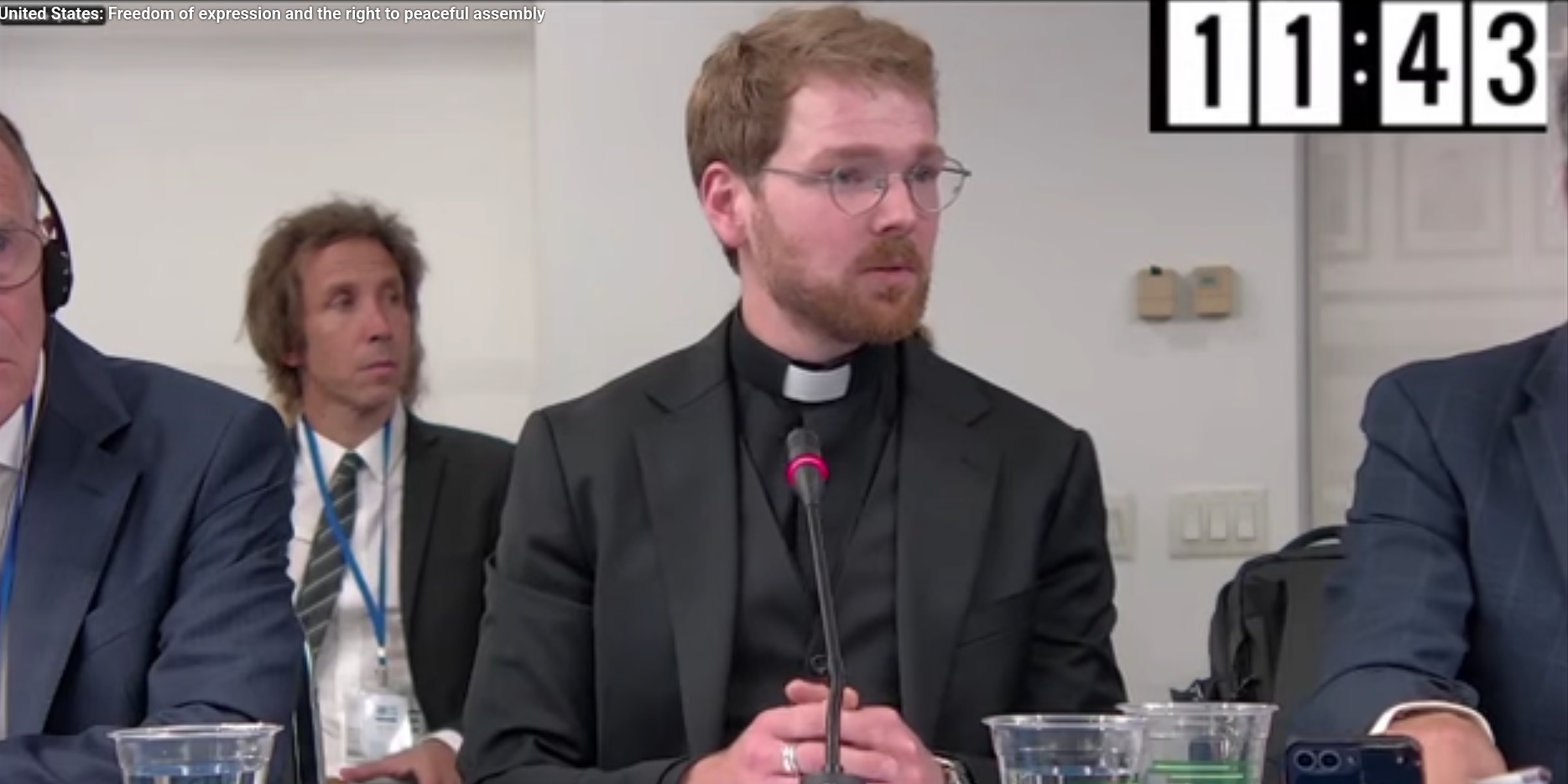
Rev. David Black, shot in the head with a pepper ball by federal agents while protesting at the Broadview Detention Facility in Chicago, testifying alongside his attorney, Locke Bowman.
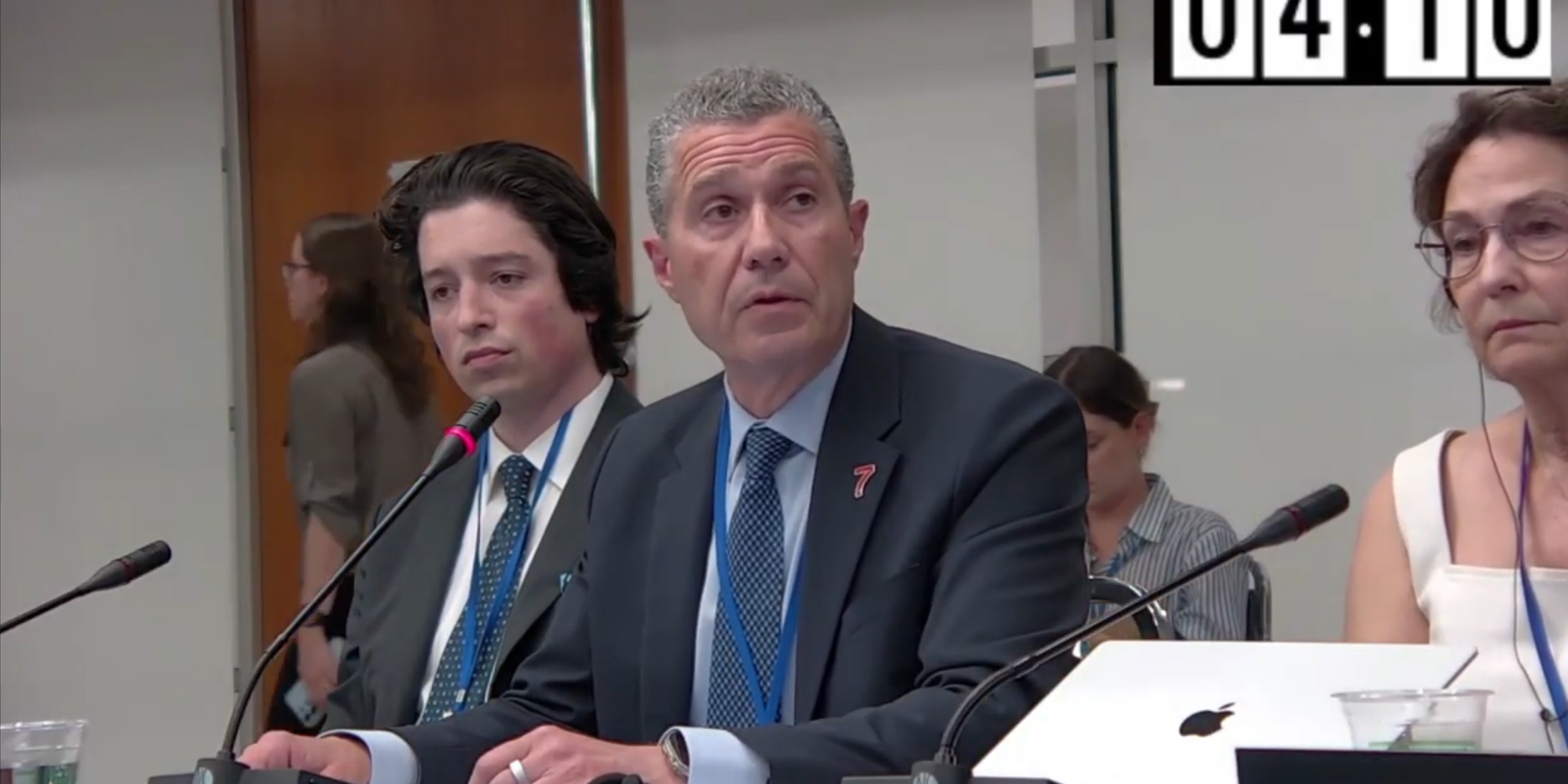
Antonio Romanucci, the lawyer representing the family of Renée Good (former counsel for the family of George Floyd), beside Susan Akram, Director, Boston University’s International Human Rights Clinic.
EXPLORE: UNHR interactive dashboard of deaths and detention resulting from ICE actions
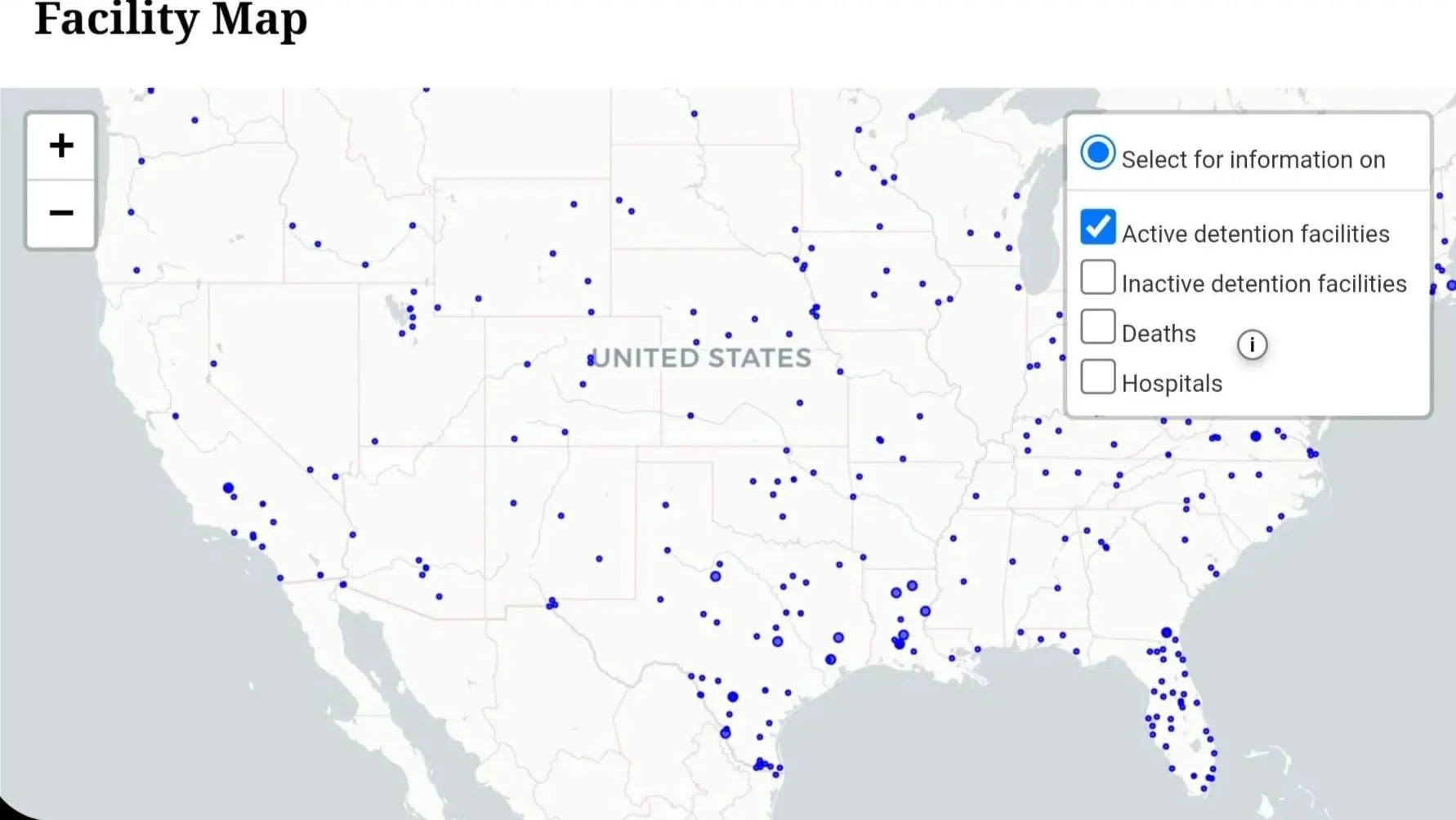
In 2026, at least 37 people have died while in Immigration and Customs Enforcement (ICE) custody and 314,334 people have been arrested related to ICE actions across the United States.
These issues and other patterns of abuse can be explored in UNHR’s interactive dashboard of deaths and detention resulting from ICE actions. The dashboard, built as part of a UNHR summer internship project, allows users to explore the U.S. immigration detention system from Fiscal Year 2023 to Fiscal Year 2026, with a focus on trends since the beginning of Donald Trump’s second administration in late January 2025.
Users can examine how detention has changed over time, where detention occurs, and which demographic groups are primarily affected. Building on government data provided by ICE in response to a public records request by the Deportation Data Project, the dashboard provides a comprehensive overview of the actions and impact of ICE, including information on detention facilities, detainee deaths, detention and removals, and incarceration of children.
More of UNHR at work
UNHR helps brief the IACHR on the Trump administration’s termination of Temporary Protected Status for Haitians; urges U.S. Senate to extend protections; reports from Springfield, the epicenter of the mass delegalization effort
UNHR and Fundar continue to bring the creation of a hybrid mechanism on disappearances in Mexico into the public debate
The IACHR’s recent report on disappearances in Mexico reflects our proposal for the “transformation of the jurisdiction on disappearances into a hybrid national-international model”
UNHR joins over 100 international law experts warning U.S. strikes may be war crimes
UNHR joins civil society in issuing Joint Travel Advisory for the United States ahead of 2026 FIFA World Cup
Artsakh Union and the University Network contribute to UN report finding displaced Artsakh women in “precarious position” in Armenia
UNHR submits an amicus brief in Massimiliano Cali v. Donald Trump regarding the Trump administration’s sanctions on Special Rapporteur on the Occupied Palestinian Territory, March 2026
UNHR Middle East Advisor Salma Waheedi contributes to African Court brief on climate obligations and advisory report to Palestinian constitutional body
UNHR in the news
Lawyer Becker: "Sánchez Berzaín is a murderer, the butcher of El Alto", La Razon
Trump Admin Faces Legal Challenge in Hemispheric Court Over ICE Protest Crackdown, Common Dreams
A Commission Monitoring Human Rights Violations Is Concerned About the US, Mother Jones
REPORT | Trump administration faces unprecedented human rights hearing over anti-ICE protest crackdown, Drop Site News
We are US civil rights lawyers. Trump’s policies have driven us to seek justice internationally, The Guardian
Over 120 Civil Society Groups Issue Travel Advisory for U.S. Ahead of FIFA World Cup, ACLU
Artsakh Union, UNHR contribute to UN report finding displaced Artsakh women in “precious position” in Armenia. Armenian Weekly
Over 100 International Law Experts Warn: U.S. Strikes on Iran Violate UN Charter and May Be War Crimes, Just Security
O espírito de Sumgait e o silêncio de Baku, por Anahit Harutyunyan, GGN
Follow us on social media
Check out our Instagram, LinkedIn, and X accounts to learn more about and stay up to date with our work advancing justice in collaboration with frontline communities worldwide.
Visit our website: www.humanrightsnetwork.org.